A guided tour
Most tools tell you what they do. Here's what Sigmund actually puts in front of you. One intake, turned into a chart you can read in a glance: the patient's affect scored line by line, seven validated scales drawn from the conversation, risk pulled to the top, and the whole person held in structured form. Scroll through the real screens below.
Free for clinicians. Free forever for trainees. See what's included →
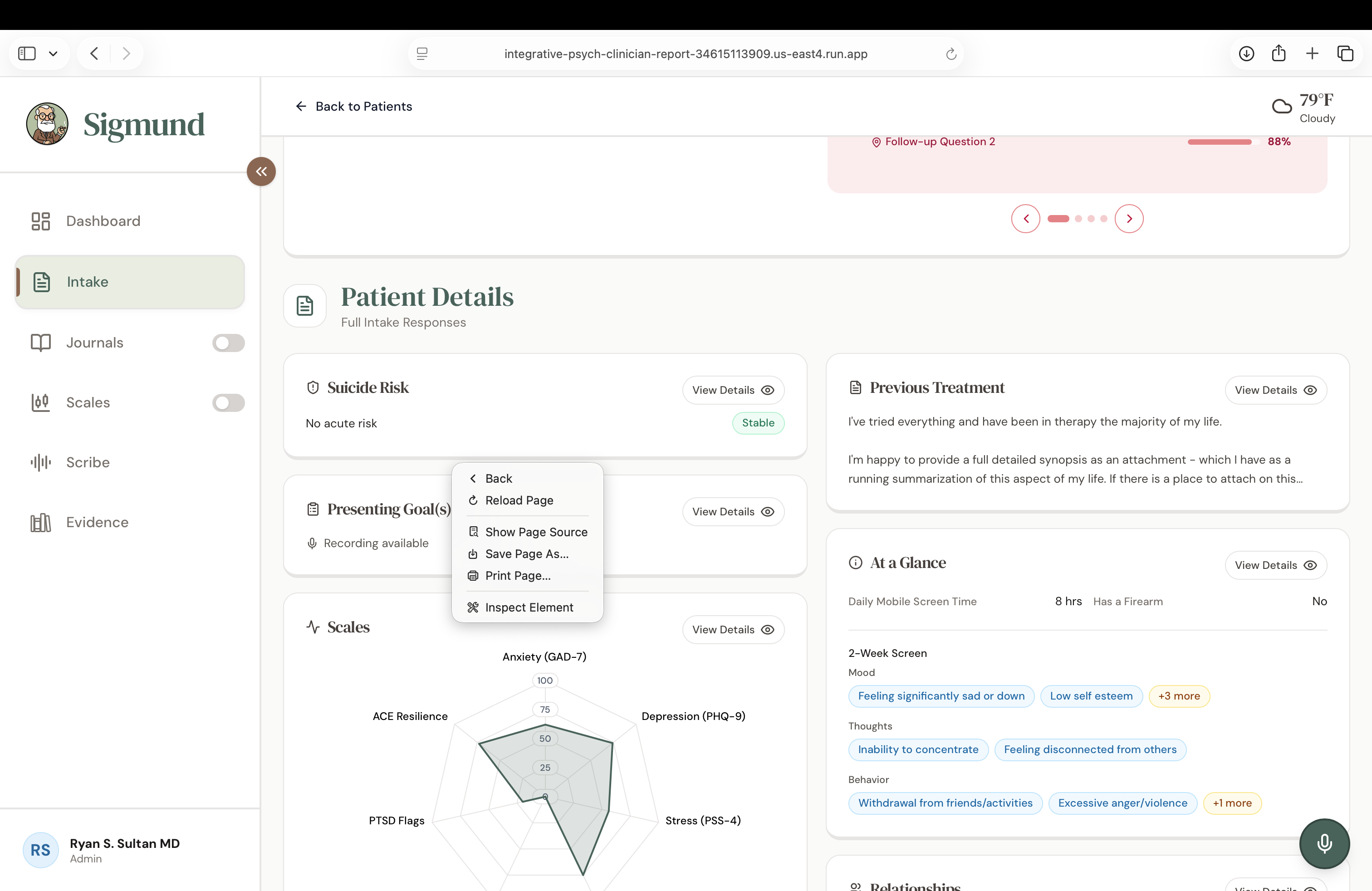
Sigmund's Index
Sigmund reads every sentence the patient wrote and gives you the emotional shape of the whole intake before you've finished your coffee. One score, the sentences that drive it, and a plain read of where the patient sits. You walk into the room already knowing what's heavy and what's holding them up.
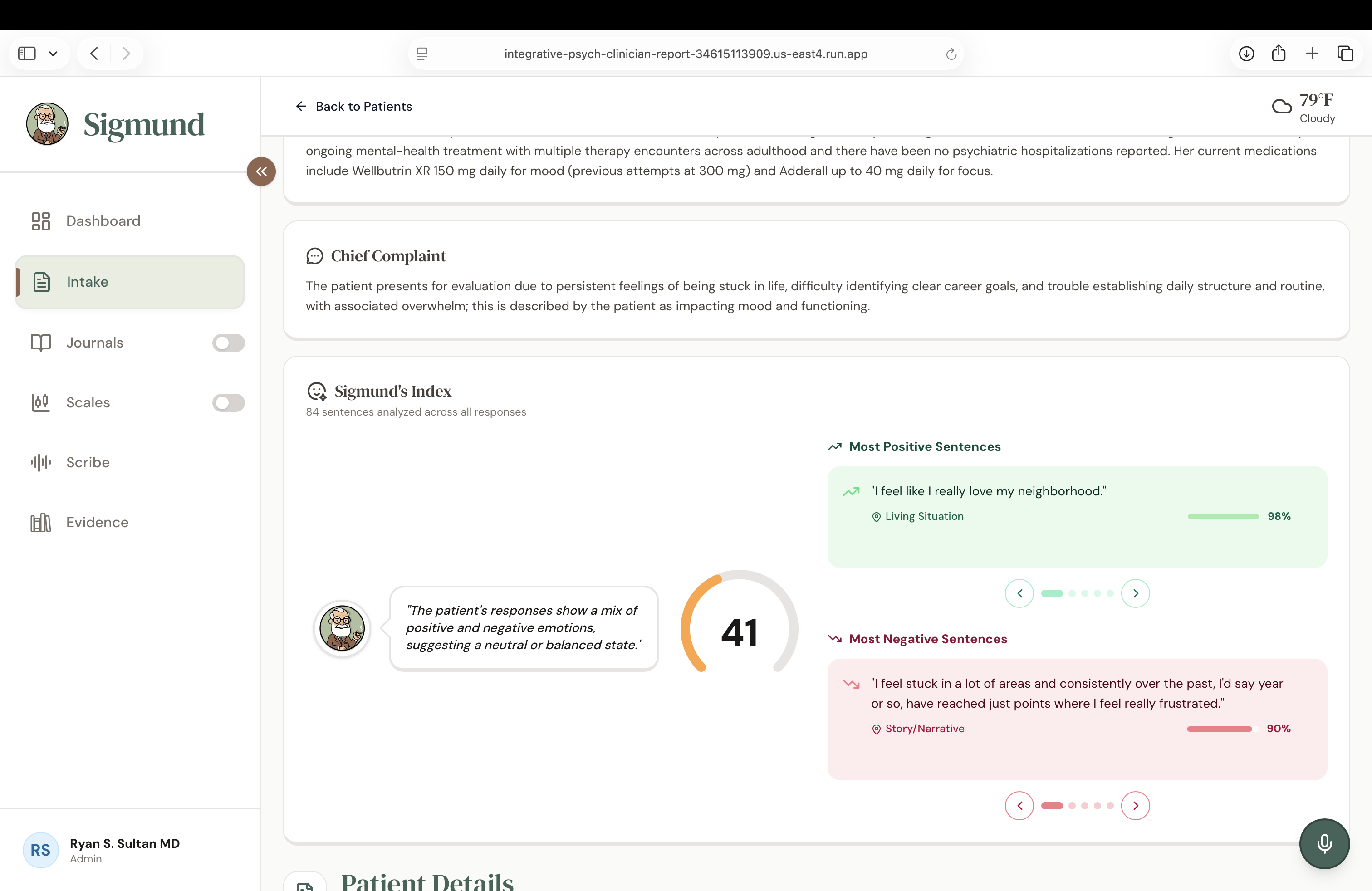
Scales
Your patient walked in and talked. They didn't bubble in a single form. By the time the conversation's done, Sigmund has scored seven validated psychometrics from what they said and plotted them as one radar you read in a glance. Anxiety spiking, depression mid-range, substance risk clean, trauma flags worth a second pass. You see the whole presentation as a shape before you've typed a word.
Risk, surfaced first
Risk doesn't wait for you to scroll. Sigmund stratifies every record and pulls the safety-critical signal to the top of the chart, so you read the patient's risk picture before you read anything else.
The whole person, structured
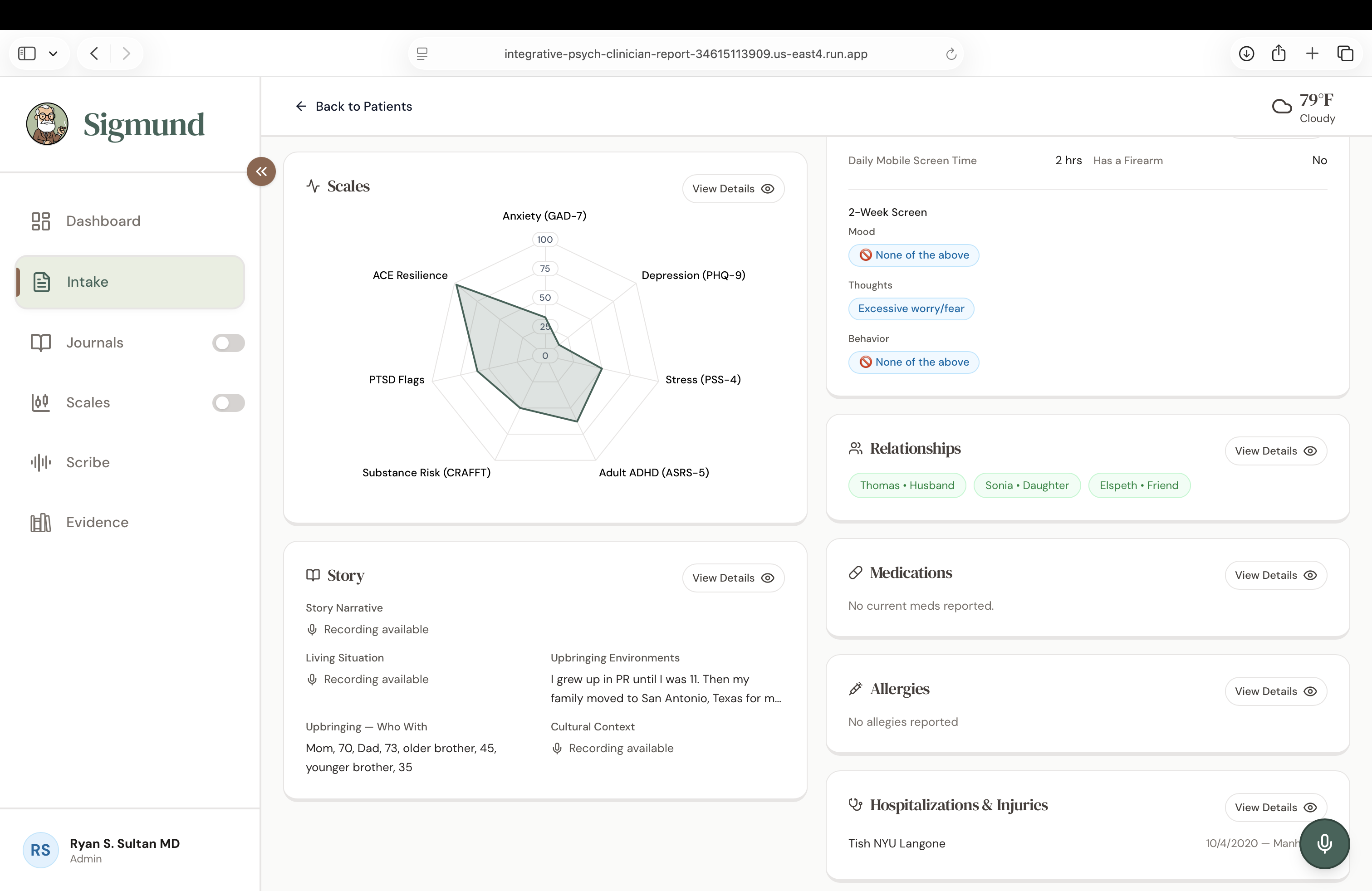
You already know good psychiatry runs on context. Where someone grew up, who's at the dinner table, what culture they carry, what they've survived. Sigmund captures all of it and keeps it structured, so the human behind the diagnosis is right there the next time you sit down.
See it on your own patients
Every screen above came out of one intake conversation. No forms, no transcription, no after-hours charting. Request access and run it on your own practice.
Screens shown use a synthetic demo patient. No real patient data is depicted.