About
Sigmund is a small project with a specific origin: it was built inside an outpatient psychiatry practice, by the psychiatrist running it.
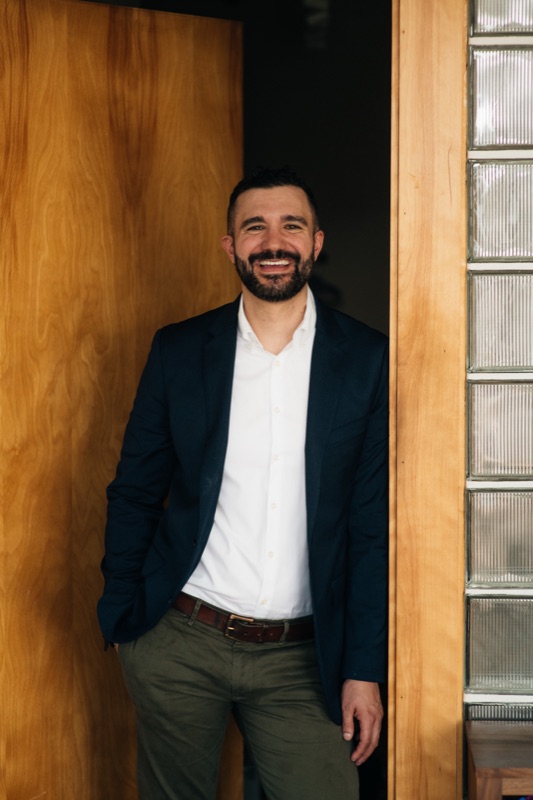
Founder
Sigmund is built by Dr. Ryan Sultan. He is an Assistant Professor of Clinical Psychiatry at Columbia University Irving Medical Center and an attending psychiatrist at NewYork-Presbyterian. He directs the Sultan Lab for Mental Health Informatics within the Columbia University Department of Psychiatry, and is affiliated with the New York State Psychiatric Institute and the Columbia Data Science Institute.
His research focuses on ADHD, cannabis use in adolescents, child psychiatry, and stimulant prescribing patterns — including the underdiagnosis and undertreatment of ADHD in girls and women. His work draws on large-scale claims data from IQVIA and MarketScan, and has appeared in JAMA, JAMA Psychiatry, JAMA Cardiology, and Pediatrics.
He also founded Integrative Psychiatry Manhattan, a New York City outpatient practice where Sigmund's CEBA engine is deployed. He writes about ADHD and depression for a general audience at Dr. Ryan Sultan's personal site. He lives and practices in New York City.
Origin
I see somewhere around eighteen outpatient visits in a clinic day. Eighteen mental status exams. Eighteen risk assessments. Eighteen medication decisions, most of them quietly consequential. And until recently, none of the software in the room knew what any of that meant.
The clearest version of the problem looked like this: I would finish clinic on a Friday with fourteen notes unwritten. I would carry them home. I would write them after my kids were asleep. Sometimes I would catch myself, at eleven at night, trying to reconstruct from memory whether a patient's affect had been constricted or merely flat. That is not how a careful note should be produced. That is the inevitable consequence of asking a clinician to be a present human with a patient and a typist for an insurance company at the same time.
I tried the ambient scribes. Several of them. They were impressive at capturing what a primary-care visit sounds like — chief complaint, review of systems, plan. What they could not do, in any version I tested, was capture a psychiatric encounter. One of them produced a note from a forty-minute medication-management visit and omitted the mental status exam entirely. Another inserted the phrase "patient denies suicidal ideation" into a section where I had not, in fact, asked. The transcription was accurate. The clinical document was not.
Around the same time, I was working in my research lab on a different problem: how to bring the relevant evidence to the moment of a clinical decision, instead of asking the clinician to do the synthesis in their head. The evidence for pediatric ADHD with comorbid anxiety, for instance, is unambiguous. It is also, in practice, almost never applied evenly. Most clinicians do not have time during a twenty-minute visit to look up the recommendations from a specific RCT in Google Scholar. I wanted the evidence to show up where the decision is, not in a journal six months later.
At some point those two problems became one problem. The note and the evidence are not separate artifacts. They are the same cognitive workflow, written down. So Sigmund is built around that workflow: he sits in on the session, watches the MSE, weighs the differential, drafts the note, and holds the citation chain — all in the same draft. The clinician signs it.
The underlying thesis is small and stubborn: psychiatry deserves software built around its actual cognitive work, not adapted from a primary-care template. That is the only thing Sigmund is trying to do.
The name

Freud trained as a neurologist. Before the couch and the case histories, he spent years at the bench: staining nerve cells, mapping the medulla, publishing a monograph on aphasia that held up for forty years. In 1895 he tried something larger. He sat down to write a Project for a Scientific Psychology, an account of memory, attention, and judgment built out of neurons and the energy that moves between them. He wanted a psychiatry that ran on mechanism instead of metaphor. He abandoned it, unpublished. The instruments to test any of it were a hundred years away.
I named this after him because the project is finally buildable. A psychiatric encounter is a reasoning task: weigh the history, read the mental status, rank the evidence, commit to a plan, and write it down so the next clinician can follow the logic. That is the work Freud wanted to formalize and couldn't. Sigmund does it in the room, in the open, with every recommendation traced back to the paper it came from.
There is a second reason the name fits. Freud's one instrument was his attention. Somewhere along the way, psychiatry pointed that attention at a screen instead of a patient. Most of the visit goes to typing into software built for a primary-care template; the notes get finished later, from memory. Sigmund carries the documentation so the clinician can carry the patient. The attention goes back where it belongs.
"The intention is to represent psychical processes as quantitatively determinate states of specifiable material particles."Sigmund Freud, Project for a Scientific Psychology, 1895. He was right, and a century early.
The path
Sigmund started as a research project, not a startup. The underlying engine — CEBA, the citation-traceable evidence architecture — was developed inside the Sultan Lab for Mental Health Informatics at the Columbia University Department of Psychiatry. Its first job was unglamorous: take a structured patient profile, surface a ranked list of evidence-supported treatment options, and show its work, paper by paper, PMID by PMID.
From the lab, it moved into a real clinical environment. Integrative Psychiatry Manhattan — a high-volume New York City outpatient practice — became the first deployment site. The early validation work was retrospective: N = 124 charts, scored against clinician-reviewed ground truth across five condition categories. The published accuracy figure (87.4%) and the effect sizes versus generic AI baselines came from that cohort.
The next step is the part that takes years. The team submitted an NIH R21 (PAR-25-310) — and a companion R01 (PAR-25-283) — to fund prospective studies testing CEBA across outpatient settings, with guideline concordance as the primary endpoint. That is the right way to validate a piece of clinical software: not with vendor case studies, but with a pre-registered protocol that can fail.
The path from a Columbia research lab to a working tool inside a clinic is unusual in consumer AI. In clinical AI worth trusting, it is closer to the only path that exists. The institutions involved — Columbia, NYSPI, NewYork-Presbyterian — are not branding. They are the accountability structure inside which Sigmund was developed and against which it will be measured.
Honest limits
An honest description of a clinical tool requires the negative space. Sigmund is several things; it is also, deliberately, several things it is not.
Sigmund is not a replacement for clinical judgment. The signature line on every note stays empty until the clinician signs it. The MSE is editable. The differential is a draft. Every recommendation he surfaces is reviewable, traceable, and rejectable. Clinical responsibility for the document and the decision lives where it has always lived — with the clinician.
Sigmund is not a medical device. It is investigational software that supports documentation and surfaces evidence. It does not diagnose, prescribe, or make autonomous clinical decisions, and it is not currently FDA-cleared.
Sigmund is not a billing service. The note Sigmund drafts is a clinical document. Billing codes, prior-authorization handling, and revenue-cycle workflows are downstream of the note and are not the system's job.
Sigmund is not a standalone record system. It connects to the clinical informatics infrastructure a practice already runs, with the aim of enhancing care and easing the documentation burden rather than adding another system to maintain. Connection work is active with design-partner clinics; the exact status for any given practice should be confirmed directly before publishing claims about it.
Sigmund is not a substitute for supervision in training settings. A draft from an AI assistant does not replace the teaching that has to happen between a resident and an attending. Sigmund is a tool inside that relationship, not a stand-in for it.
Near-term
Three priorities, in order, without grandiosity.
Close the founding-clinician beta. A small cohort of psychiatrists, in private practice and academic settings, using Sigmund daily and telling us what is wrong with it. The point of this cohort is to find the failure modes the lab cohort could not, and to refine the system against the texture of real clinical days.
Complete the R21 prospective study. The submitted NIH R21 (PAR-25-310) will, if funded, test CEBA prospectively across two outpatient settings, with guideline concordance as the primary outcome. This is the work that moves Sigmund from "validated retrospectively in 124 charts" to "tested under the rules of a real clinical trial."
Deepen the clinical-informatics connection. The single largest source of friction for clinicians is the gap between a useful draft and the chart where it has to land. Sigmund connects to a practice's existing clinical informatics infrastructure to close that gap, enhance care, and ease the clinician's burden. Tightening that connection, practice by practice, is the work of the next year.
If you are a psychiatrist who wants to be early on this, the waitlist is open.
Sigmund is investigational and intended to assist — not replace — clinical judgment.